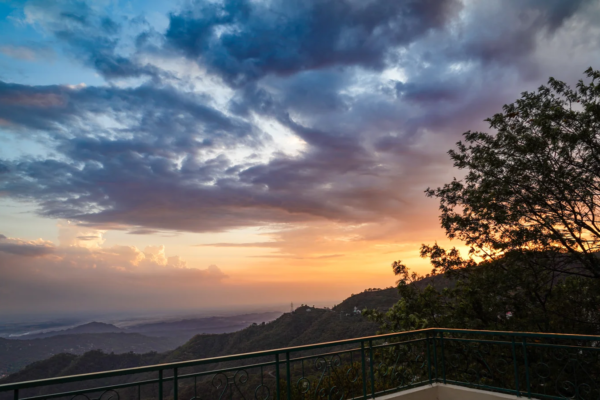
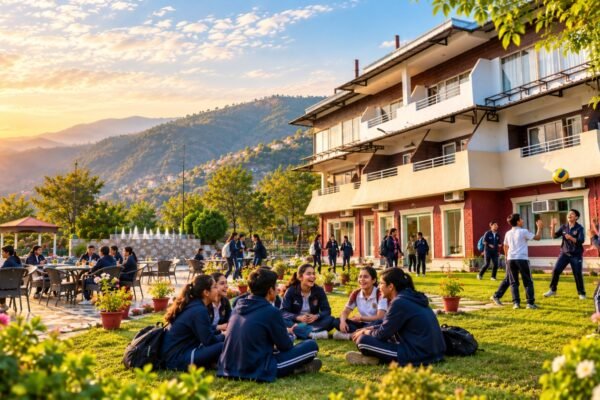
Jaitak Fort in Nahan was not something we had searched for.
It found us the way the best things on trips always find you. Not through planning. Through a conversation at breakfast on the second morning at The Sirmour Retreat, when the valley below was still in mist and neither of us had made any decisions about the day yet.
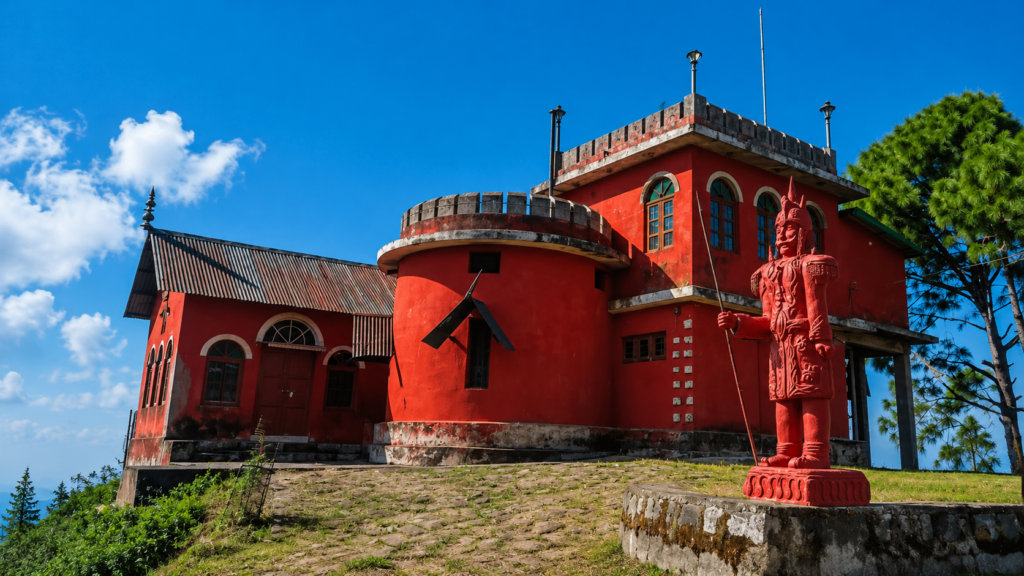
My friend Sameer had asked the team what most visitors to Nahan miss.
The answer was immediate.
Jaitak Fort.
Sameer looked at me across the table. I looked at him. We had no plans for the morning. We had chai getting cold in front of us and a view that was asking nothing of us and two hours before either of us needed to be anywhere.
We left forty minutes later.
What Nobody Had Told Us About Jaitak Fort Nahan
I am someone who reads about places before visiting them. Not obsessively. Enough to arrive with some context rather than none.
I had read about Nahan properly before this trip. The Shivalik hills. The altitude. Renuka Ji Lake. The history of Sirmour district going back centuries. I had read enough to feel like I understood what the area contained.
Jaitak Fort in Nahan had not appeared in anything I had read.
Not once.
This bothered me slightly on the drive up to the fort because it suggested either that I had been reading the wrong things or that the fort was genuinely unknown enough to have escaped the kind of documentation that most historical sites in Himachal have accumulated.
It turned out to be both.
And the reason Jaitak Fort in Nahan had escaped that documentation is the same reason it is worth the morning you will spend finding it. It has not been packaged. It has not been explained. It sits in the hills above Nahan in more or less the same condition that history left it in and asks you to meet it on its own terms rather than through an audio guide and a ticketing queue.
The History That Makes Jaitak Fort Nahan Worth Understanding
Before you go, you need to know what you are walking toward.
Jaitak Fort in Nahan is most significantly associated with the Anglo-Nepalese War of 1814 to 1816. A conflict that most people educated outside of specific military history circles know very little about but that shaped the political geography of this part of the subcontinent in ways that lasted long after the treaty that ended it.
The Gurkha commander Ranjor Singh Thapa held Jaitak Fort against the British forces with a tenacity that became one of the most discussed episodes of that conflict. The fort changed hands more than once. The fighting in the hills around Nahan during that period was some of the most difficult the British forces encountered in the entire campaign.
Standing inside Jaitak Fort in Nahan and knowing this does something to how you see the walls. The stones stop being stones and become something that was present for events that mattered. That is what historical sites do when they are genuine rather than reconstructed and this one is entirely genuine.
The team at The Sirmour Retreat had given us a brief outline of this history at breakfast. Enough to arrive with the right kind of attention. Not so much that the fort had nothing left to tell us itself.
That balance was deliberate on their part and it was the right call.
The Drive and the Trail to Jaitak Fort in Nahan
The fort sits above Nahan and the approach involves a drive followed by a trail that takes between thirty and forty five minutes depending on your pace and how many times you stop because the view behind you has become more interesting than the path ahead.
We stopped three times.
The first because the Shivalik range was visible from a clearing in a way that made the whole range look different from the angle we had been seeing it from The Sirmour Retreat terrace. Familiar and completely different at the same time.
The second because Sameer had spotted something moving in the trees that turned out to be a langur sitting on a branch watching us with the specific boredom of an animal that has seen too many humans and has revised its opinion of the species accordingly.
The third because the fort walls appeared through the trees for the first time and we both stopped walking without deciding to.
You see it before you fully arrive. The stone coming through the tree line at an angle that makes it look almost natural, like the hill itself had assembled it. And then you clear the last section of trail and you are inside the fort perimeter and the whole thing opens up and the view from the walls is something that no photograph in my camera roll has managed to capture adequately.
What Jaitak Fort Nahan Looks Like When You Get There
The fort is not a tourist attraction in any of the ways that phrase usually implies.
No entry gate with a ticket booth. No signboard explaining what you are looking at in four languages. No railing preventing you from touching the history.
Just the fort. The walls. The remains of structures that once had functions that you can sometimes guess and sometimes cannot. The grass growing where floors used to be. The sky visible through openings that used to have roofs.
Jaitak Fort in Nahan is the kind of historical site that demands something from you. Not reverence exactly. Attention. The willingness to use your imagination to meet what is actually there rather than waiting for the experience to be delivered to you complete.
Sameer is an architect. He spent almost forty five minutes walking the perimeter of the fort walls alone, touching things, looking at construction methods, occasionally crouching to examine something at ground level that I could not identify from a distance.
He came back looking like he had received something.
“The way they used the hill,” he said. “The fort is not on the hill. It is the hill. Whoever built this understood the terrain in a way that most military architecture does not bother to.”
I did not have the technical knowledge to evaluate that. I had enough to understand that he was describing something genuine.
The View From Jaitak Fort Nahan
I need to tell you about the view because it is the thing that will stay with you longest.
From the upper walls of Jaitak Fort in Nahan, on a clear morning, the plains of North India are visible below in one direction and the deeper Shivalik range stretches in the other. The town of Nahan is visible below, small and unhurried and completely itself from this altitude.
Standing on those walls and knowing that two hundred years ago people stood in this same spot watching British troops advance through the hills below produces a specific quality of connection to the past that is different from anything you get from a museum or a plaque.
The fort was a strategic position. Standing inside it you understand immediately why. The visibility in every direction. The commanding height above the approaches. The way the walls follow the contours of the hill so that the structure itself is almost invisible until you are already inside it.
Sameer stood on the upper section for a long time looking at the plains below without speaking.
I stood next to him and did the same.
At some point he said: “Ranjor Singh Thapa stood here.”
Just that. Just the name and the fact of it. In a place where the statement meant something that it would not mean anywhere else.
“Jaitak Fort in Nahan is the thing The Sirmour Retreat told us about that we almost skipped because we thought we were too comfortable on the terrace to go looking for something. We went. Standing on those walls and knowing the history and seeing the plains below, I understood something about this part of Himachal that three days of beautiful views had not managed to teach me. Go before everyone else figures out it is there.”
Sameer, guest at The Sirmour Retreat, Nahan
What the Fort Does to the Rest of the Trip
We came back to The Sirmour Retreat for lunch.
The terrace was the same terrace it had been at breakfast. The Shivalik hills were the same hills. The valley below was the same valley doing the same things with the midday light that it always does.
But something had shifted in how we were seeing all of it.
Jaitak Fort in Nahan had added a layer to our understanding of the landscape that the landscape itself could not have provided. The hills were not just beautiful hills anymore. They were hills that had been contested. Hills that people had fought for and died on and defended with a stubbornness that history had recorded even when it had not publicised it.
That knowledge changes what you see when you look at them.
Sameer said it better than I could over lunch.
“I feel like I actually know where I am now. Not just that it is beautiful. What it is.”
That is what Jaitak Fort in Nahan gives you that most day trips do not.
Not just an experience to add to the itinerary. A context for everything else the trip contains.
What You Should Know Before You Go
Jaitak Fort in Nahan is not far from The Sirmour Retreat. The drive takes about twenty to thirty minutes depending on the route and the road conditions. The trail from the drop off point to the fort takes between thirty and forty five minutes at a comfortable pace.
Wear shoes you can trust on uneven ground. The trail is not dangerous but it is not a paved footpath either. The fort itself has sections where the ground is uneven and the walls have gaps and edges that require basic attention to navigate safely.
Go in the morning. The light is better for both the trail and the views from the fort walls. The heat in the middle of the day makes the exposed sections of the fort uncomfortable in the summer months and the morning clarity gives you the best visibility across the plains below.
Take water. There is nothing available near the fort and the combination of the trail and the time you will spend inside the walls is enough to make you thirsty in a way you do not fully anticipate before you go.
Tell the team at The Sirmour Retreat you want to visit Jaitak Fort in Nahan before you go. They will give you the context that makes the fort meaningful rather than just visually interesting. The history is the point and arriving with it changes what you find when you get there.
The best months are October through June. The post monsoon months of October and November give you clear visibility across the plains that makes the view from the fort walls extraordinary. March and April give you mild temperatures that make both the trail and the time inside the fort comfortable across the full morning.
Do not rush this. Give it a full morning. The fort rewards time in a way that a quick visit does not.
Why This Is the Most Important Morning of Any Nahan Trip
The Sirmour Retreat gives you the Shivalik hills, the terrace, the view, the food, the particular quality of quiet that this part of Himachal produces. All of that is real and all of it is worth the drive from wherever you are coming from.
Jaitak Fort in Nahan adds something to that which the property alone cannot provide.
It adds depth.
The hills become more than landscape. The location becomes more than beautiful. The whole experience of being in this part of Sirmour district acquires a layer that makes it something you carry differently when you go home.
Most travellers who come to Nahan never find the fort. Not because it is hidden in any practical sense. Because nobody has told them it is worth finding.
We are telling you now.
Go on the second morning of your stay at The Sirmour Retreat. Go with the context the team will give you at breakfast. Walk the trail without rushing. Spend real time inside the walls.
Stand on the upper section and look at the plains below and know what you are standing in and what it held.
Then come back to the terrace for lunch and see if the hills look different to you.
They will.